We will continue our seminar series on 29th April 2024
On site: Salón de Grados Leganés
For the next event in the Aerospace PhD Seminar Series, we will have the pleasure of hosting Dr. Victor Désangles, researcher at ONERA.
The event will take place in the Salón de Grados on Monday, April 29Th at 1pm and will be streamed (Online).
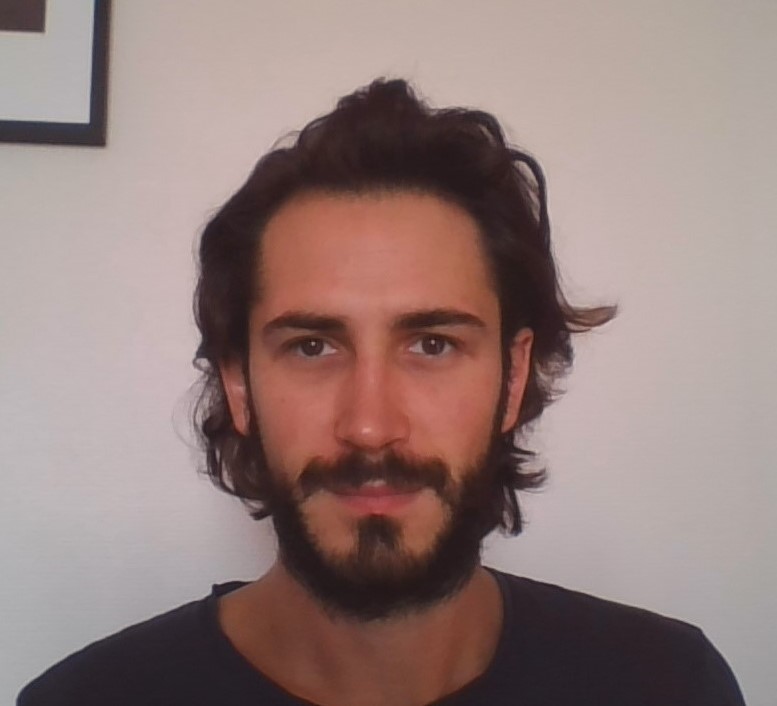
Victor Désangles is a researcher at ONERA. His field of research includes plasma sources at low pressure, instabilities in magnetized plasmas, development of plasma and electric propulsion diagnostics and plasma dynamic in magnetic fields. He did his PhD at the Physics laboratory of ENS Lyon in France, focusing his work on the driving mechanisms of the rotation of a magnetized plasma column. Then, he worked as a post-doctoral fellow at the Plasma Physics Laboratory at Ecole Polytechnique in France, mainly studying oscillatory phenomenon in Hall-Effect Thrusters. At ONERA, he has participated to the H2020 MINOTOR project aiming at developing the concept and improving performances of the ECRA thruster. He has focused his research on understanding the operation of ECRTs. Recently, he has been awarded a four-year young researcher grant by French National Research Agency to study compatibility between ECRA thruster and iodine propellant.
“Electron Cyclotron Resonance thrusters: Recent results and opened questions”
Abstract:
Electron Cyclotron Resonance Thrusters (ECRT) are emergent technologies of electric propulsion, more specifically plasma propulsion, designed to perform in-orbit trajectory corrections. For now ten to fifteen years, the interest in this technology has been increasing thanks to its demonstrated performances. A version of ECRT, named ECRA, based on a coaxial microwave discharge and a purely divergent magnetic field called magnetic nozzle has been investigated at the Physics, Instrumentation, Environment and Space department of ONERA since 2010. Last prototypes have demonstrated stable operation with high performances levels. However, the ECRT technology is still very poorly described by scientific literature due to the relatively low number of studies and to the complexity of phenomenon involved.
This talk will present the main studies led at ONERA in the last years aiming at improving our understanding of the ECRT operation. A large variety of scientific problems are being tackled: the expansion of plasma in the magnetic nozzle, thrust production mechanisms, the coupling of microwave to the plasma and the acceleration of ions and their demagnetisation.

The seminars will begin at 1pm and will take place in the Auditorium Salón de Grados (Padre Soler) EPS Leganés.
No previous registration is required.
 PhD in Aerospace Engineering UC3M