We continue our seminar series, on Monday, Feb. 3rd at 13.00
On site: Salón de Grados (Leganés)
For this event in the Aerospace PhD Seminar Series, we had the pleasure of hosting Dr. Prof. Sanghoo PARK, assistant professor in the Department of Nuclear and Quantum Engineering at Korea Advanced Institute of Science and Technology (KAIST), Republic of Korea.
The event took place in the Salón de Grados on Monday, February 3rd at 13:00 pm and was streamed (Online).
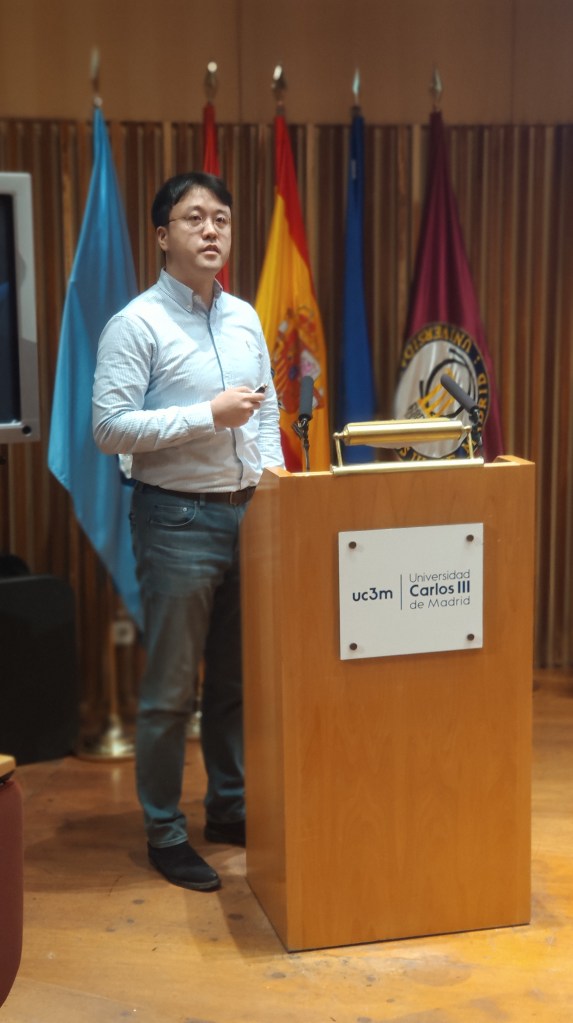
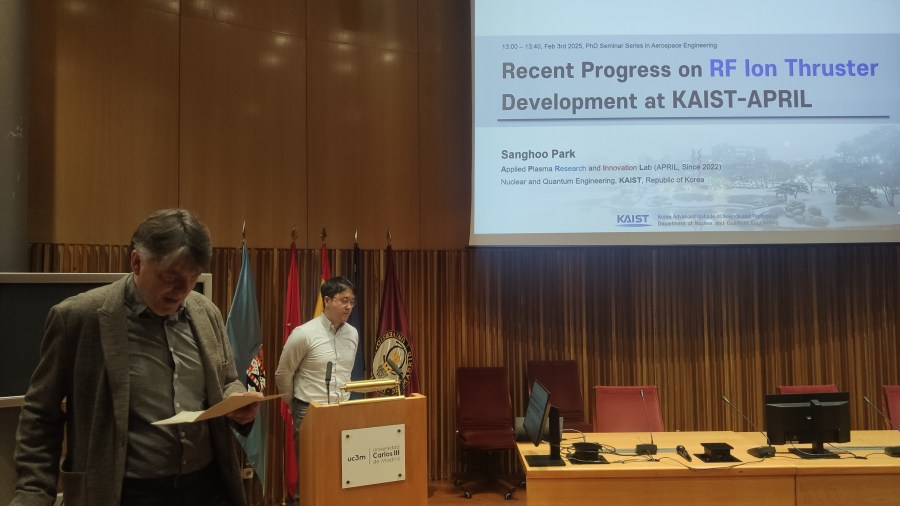
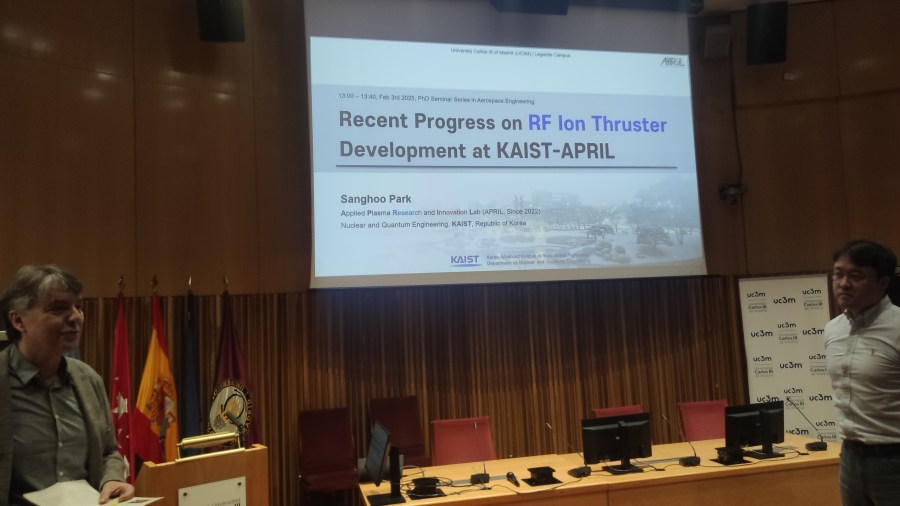
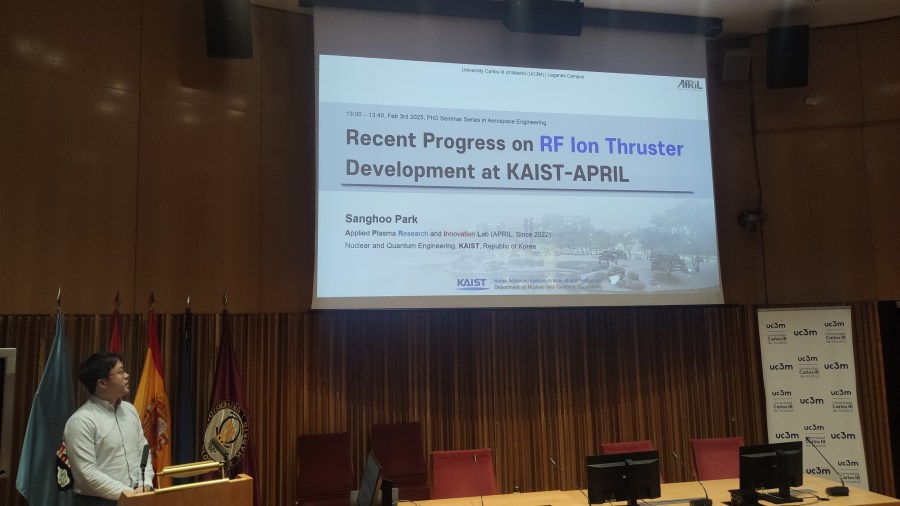
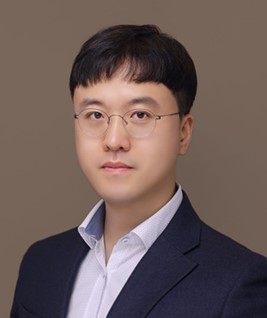
Professor Sanghoo Park is currently an assistant professor in the Department of Nuclear and Quantum Engineering at Korea Advanced Institute of Science and Technology (KAIST), Republic of Korea. Since March 2022, he has led the Applied Plasma Research and Innovation Lab (APRIL) of KAIST. He trained and received his Ph.D. degree in Physics from KAIST in 2016. His research interests have been primarily focused on plasma diagnostics, characterization, and utilization for atmospheric pressure plasmas. Some of his scientific activity has been also interested in plasma applications for biomedicine, food, and agriculture to explore the practical impact of plasma and diversify it, not limited to the fundamental research. His group is now expanding its scope to low-pressure plasmas, particularly in advanced semiconductor processing and electric propulsion. He has published 23 peer-reviewed articles as a main author in scientific journals including Nature and Nature Communications
“Recent Progress on RF Ion Thruster Development at KAIST-APRIL“
Abstract:
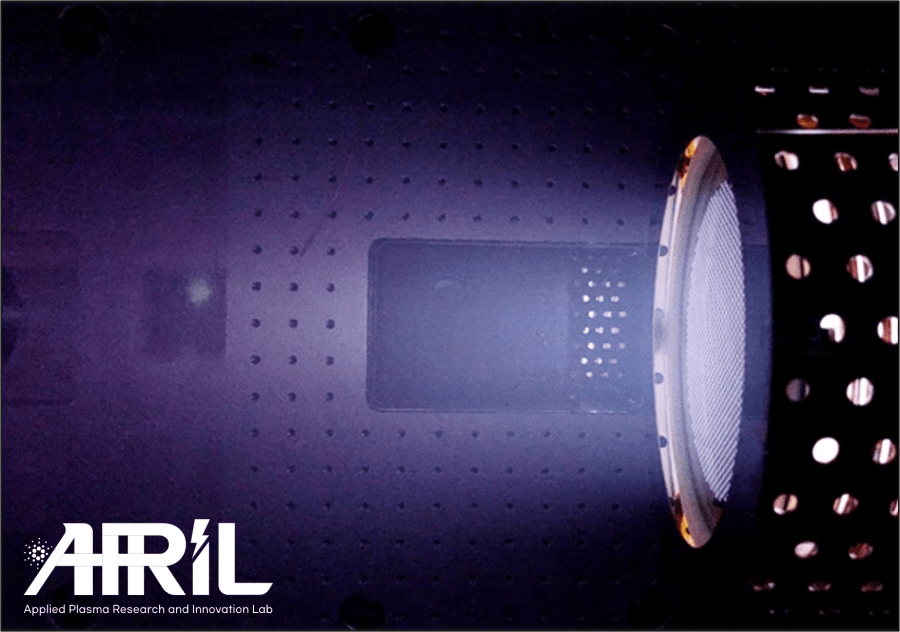
Radio-frequency (RF) gridded ion thrusters (RITs) have been considered and applied to deep space missions, offering high-power, high-efficiency capability. Traditionally, validating thruster performance requires extensive ground tests before launching a flight model, which required large, high-vacuum facilities. Because of such complicated and time consuming works, computational simulations have been preferred to simply assess detailed characteristics of ion thrusters relevant to thrust performance. Here, we present a comprehensive numerical simulation of an RF inductively coupled plasma (ICP) ion thruster using an equivalent 2D-axisymmetric model in a single tool, COMSOL Multiphysics. Within a single software framework, we sequentially solve for rarefied gas dynamics, time-averaged plasma properties, and ion beam extraction by employing relevant physics modules. This suggested method enables us to numerically test a new RF gridded ion thruster simply with varying design factors (i.e., chamber dimensions, etc.) and operating parameters (i.e., coil power, flow rate of supplying fuel gas, etc.), while maintaining affordable computational cost. Our simulation results yield mass utilization and electrical efficiencies that closely match values reported in earlier studies, thereby validating the numerical model. Based on this numerical study, we recently developed a prototype of the RF ion thruster and currently preparing the necessary facilities for further experimental research.
The seminar began at 13:00 pm and took place in the Salón de Grados, Leganés.
No previous registration was required.
 PhD in Aerospace Engineering UC3M