We continue our seminars serie, on Friday, June 27th at 15.30
On site: Salón de Grados (Leganés)
For this event in the Aerospace PhD Seminar Series, we had the pleasure of hosting Dr. Luca Magri, professor in Scientific Machine Learning at Imperial College London, United Kingdom, and Antonio Colanera, Postdoc in Politecnico di Torino, Italy, and honorary research associate at Imperial College London, United Kingdom.
The event took place in the Salón de Grados on Friday, June 27th at 15:30 pm.
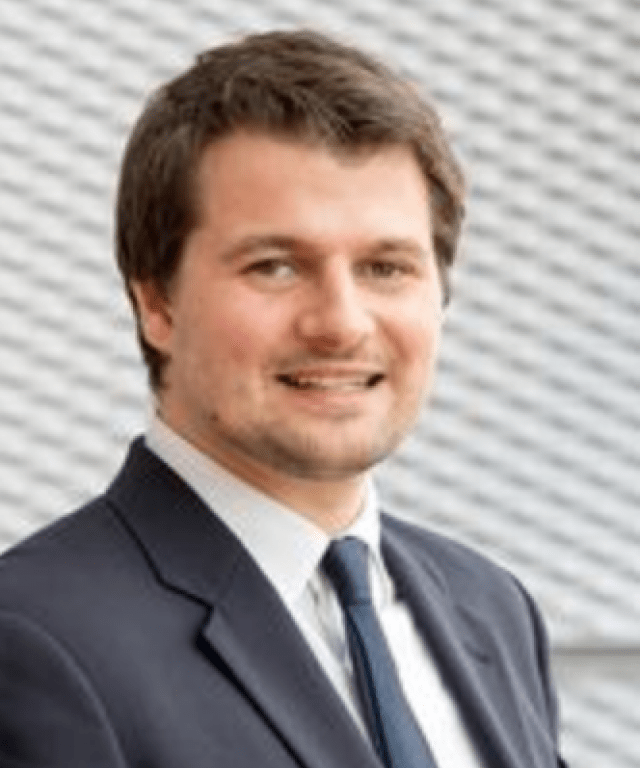
Professor Luca Magri is a Professor in Scientific Machine Learning at Imperial College London. Luca is a Fellow and group leader under the Data-Centric Engineering Programme of The Alan TuringInstitute. Prior to joining Imperial, Luca was a Lecturer at Cambridge University Engineering Department, Royal Academy of Engineering (RAEng) Research Fellow, and Fellow of Pembroke College. Prior to becoming a lecturer and RAEng Research Fellow at Cambridge, he was a postdoctoral Fellow at Stanford University Center for Turbulence Research. He obtained his PhD in Engineering at the University of Cambridge. His research is currently funded by ERC, UKRI, and EPSRC.

Antonio Colanera is a postdoc in Scientific machine learning in Politecnico di Torino and Honorary research associate in Imperial College London. He was a PhD in Industrial Engineering at the University of “Federico II” in Naples, Italy, under the supervision of Prof. Luigi de Luca and Dr Matteo Chiatto. His research focused on the simulation, modal and stability analysis of two-phase flows in collaboration with Prof. Francesco Grasso of the Princeton University. Then he focused on robust modal analysis working with prof. Oliver T. Schmidt of University of San Diego. Furthermore, hes’s been a Visiting PhD at the Harbin Institute of Technology in Shenzhen, China, where he worked on cluster-based network modelling (CNM) with Prof. Bernd R. Noack. Additionally. He spent time at the Technische Universität Berlin in Germany with prof. Kilian Oberleithner, working on extended approaches for CNMs and physics informed neural networks.
“Scientific Machine Learning for reduced-order modelling of chaotic flows”
Abstract:
Reduced-order modelling (ROM) offers a powerful toolset for accelerating the simulation and analysis of high-dimensional dynamical systems, particularly in fluid mechanics. However, when applied to chaotic flows, characterized by sensitivity to initial conditions and broadband temporal dynamics, traditional ROM techniques often suffer from limited accuracy and stability. ROM approaches can be broadly categorized as either non-intrusive or intrusive. Non-intrusive ROMs are data-driven, i.e., they bypass the knowledge of the governing equations and rely only on observables. These methods often leverage scientific machine learning (SciML) techniques, with distinct modeling approaches, architectures and training paradigms that embed physical constraints, leverage symmetry structures, and exploit low-dimensional manifolds in latent space. In contrast, intrusive ROMs are derived from the governing equations of the full-order model (FOM), typically by projecting the equations onto a low-dimensional representation. These approaches are typically global, meaning they are optimized over the entire dataset. In chaotic systems solution manifolds can exhibit complex geometries, which may render global ROMs inaccurate. We have proposed quantized local ROMs, in which a collection of local ROMs is constructed to model dynamics in different regions of the solution manifold. Through illustrative examples, including canonical chaotic flows, we demonstrate how SciML-enhanced ROMs can achieve robust long-term predictions and adapt to local dynamical regimes.

The seminar began at 15:30 pm and took place in the Salón de Grados, Leganés.
No previous registration was required.
 PhD in Aerospace Engineering UC3M