We continue our seminars serie, on Thursday, September 4th at 13:00H
On site: Sala de Video 3.S1.08 Biblioteca
For this event in the Aerospace PhD Seminar Series, we had the pleasure of hosting Dr. Yusuke Koide, JSPS Postdoctoral Research Fellow at Nagoya University, Japan, and Dr. Ryo Araki, Assistant Professor at Tokyo University of Science, Japan.
The event took place in the Sala de Video 3.S1.08 Biblioteca on Thursday, September 4th at 13:00 pm and was streamed online.
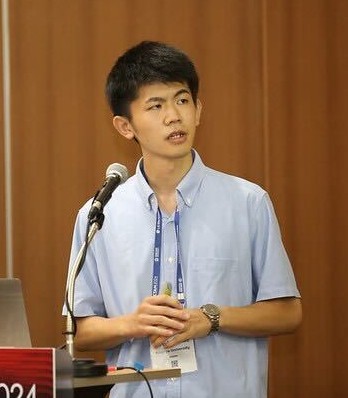
Yusuke Koide is currently a JSPS Postdoctoral Research Fellow in the Department of Materials Physics at Nagoya University. His research focuses on turbulence modulation by wormlike micelles, using a multiscale approach including molecular simulations of wormlike micelles and direct numerical simulations of turbulent flows. Before that, he received his Ph.D. from Osaka University in 2024, where he studied the dynamics of surfactant wormlike micelles in flowing solutions under the supervision of Professor Susumu Goto.
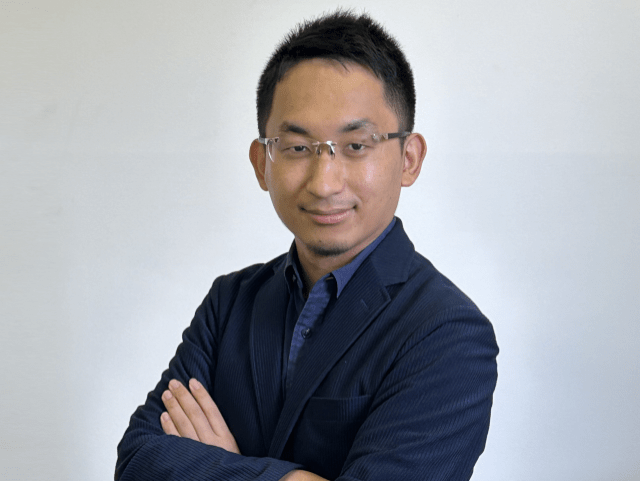
Ryo Araki is currently a Fixed-Term Assistant Professor at Tokyo University of Science, where he develops an information-theoretic picture of turbulence. Before that, he received his Ph.D. from both Osaka University in Japan and Ecole Centrale de Lyon in France in 2023 with a double-degree program, supervised by Prof. Susumu Goto and Dr. Wouter J.T. Bos, respectively. In his PhD thesis, he investigated energy cascade, one of the most fundamental concepts of turbulence, from various perspectives, including time, physical space, and scale space.
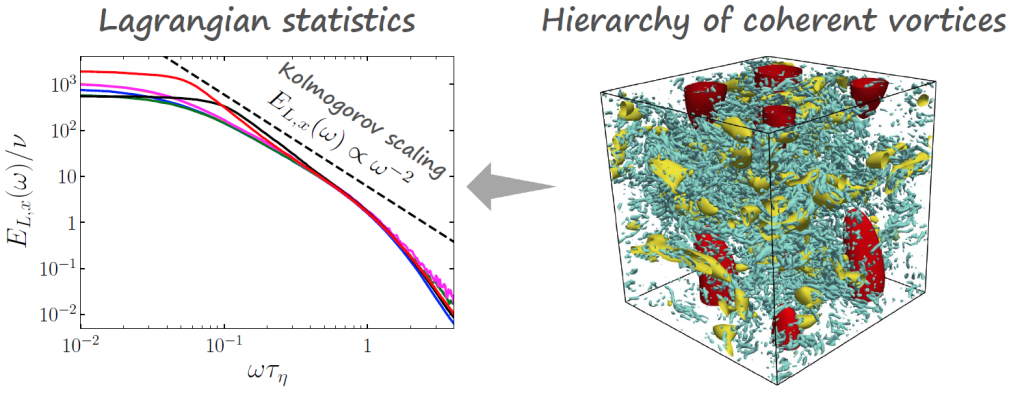
“How universal are Lagrangian statistics of turbulence? Insights from the hierarchy of coherent vortices” – Dr. Yusuke Koide
Abstract:
How universal are the Lagrangian properties of turbulence? From the Eulerian viewpoint, the energy spectrum, once normalized by the kinematic viscosity and the energy dissipation rate, collapses onto a single curve regardless of the method used to drive turbulence. The power spectral density of the Lagrangian velocity has also been reported to follow the Kolmogorov scaling within the Lagrangian inertial range. However, its universality and formation mechanism remain unclear.
To answer this question, we investigate the Lagrangian spectrum for turbulent flows with different Reynolds numbers and forcing methods using direct numerical simulations. This systematic comparison demonstrates that universal behavior is confined to a narrow high-frequency regime, whereas nonuniversality depending on the forcing method appears broadly in a low-frequency regime.
To identify the physical origin of these features, we propose a scale-decomposition method for the Lagrangian velocity that relates the hierarchy of coherent vortices to the Lagrangian properties of turbulence. Our scale-decomposition analysis reveals how vortices at different scales form the power spectral density of the Lagrangian velocity: small-scale vortices in the inertial range contribute to the spectrum in a self-similar manner, whereas the contribution from the largest-scale flows exhibits nonuniversal behavior and can contaminate the Kolmogorov scaling. These findings provide a perspective for interpreting experimental and numerical data on Lagrangian statistics based on the hierarchy of coherent vortices with different length scales.
“Forgetful turbulent energy cascade” – Dr. Ryo Araki
Abstract:
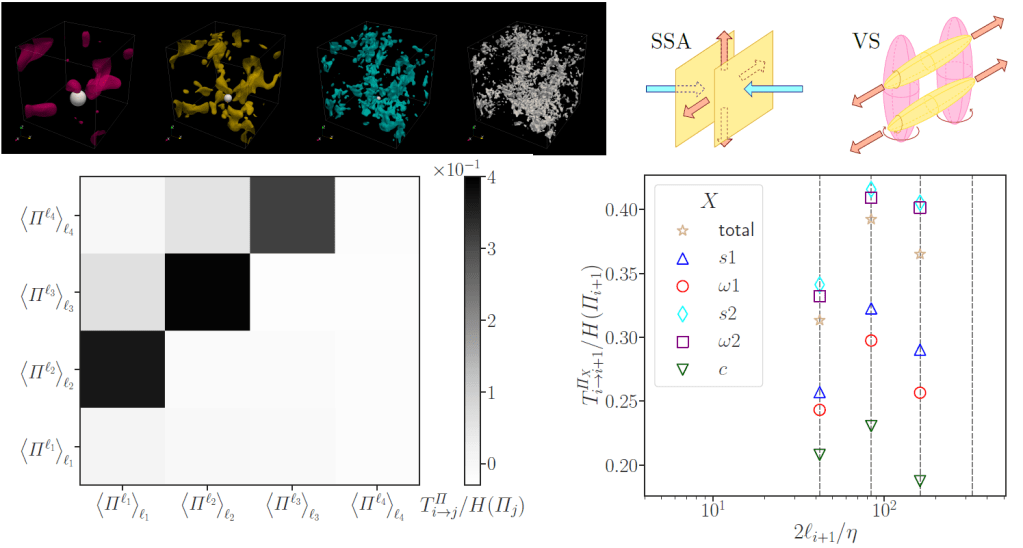
Turbulence is a ubiquitous phenomenon which appears in our daily lives. In fully developed turbulence, i.e. at high Reynolds numbers, the small-scale statistics are believed to be universal. This characteristic is often associated with an intuitive picture that the small scales become universal by “forgetting” about the large-scale features during the energy cascade process. In our recent work (Araki, Vela-Martin, and Lozano-Duran, J. Phys. Conf. Ser., 2024), we investigated this scenario in an information-theoretic manner. More specifically, we evaluated a quantity called information flux to quantify the level of causal in developed turbulence. Furthermore, we analysed different energy cascade mechanisms and how they contribute to the information transfer in turbulence.
The seminar began at 13:00 pm and will take place in the Sala de Video 3.S1.08 Biblioteca.
No previous registration was required.
 PhD in Aerospace Engineering UC3M