We are pleased to introduce you to our newest additions to the Aerospace Engineering PhD Program for this new academic year.
Throughout this publication, information is provided on each of the eight new students in the program, along with details about their research topics and supervisors.
Mario de la Fuente García
Mario de la Fuente García will be pursuing a thesis titled “Aerodynamics, Stability and Control of bio-inspired flapping-wing vehicles” and will be supervised by Prof. Óscar Flores Arias (UC3M).
The main objective of this thesis is to build new knowledge on the field of unsteady aerodynamics, flight dynamics, stability and control of Micro-Air Vehicles (MAVs), to close the gap between current state-of-the art MAV design and real flight capabilities of natural fliers.

Omar Eladarousy
Omar Eladarousy will be pursuing a thesis titled “Analysis of the interaction of a high energy plasma thruster plume with a downstream object” and will be supervised by Profs. Jiewei Zhou Zhu (UC3M) and Mario Merino Martínez (UC3M).
This thesis will tackle the numerical modeling and simulation of plasma thruster plumes and their interaction with immersed bodies, applied to space debris removal with the ‘ion beam shepherd’ concept.
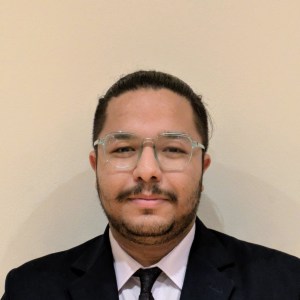
Víctor Francés Belda
Víctor Francés Belda will be pursuing a thesis titled “Data-Driven Model-Based Approaches for Efficient Flow Control” and will be supervised by Profs. Rodrigo Castellanos García de Blas (UC3M) and Carlos Sanmiguel Vila (INTA).
This thesis explores advanced flow control for aerospace applications through a model-based reinforcement learning (RL) framework. It seeks to address challenges such as high system dimensionality and limited real-time observability by developing reduced-order models that capture essential flow dynamics. These models, combined with state estimation methods under noise and partial data, enable the training of efficient and robust RL control policies.

Pablo Norczyk Simon
Pablo Norczyk Simon will be pursuing a thesis titled “Surrogate-Based Aerodynamic Shape Optimization under Noisy Functions” and will be supervised by Profs. Rauno Cavallaro (BSC-CNS) and Joaquim R. R. A. Martins (MDOLab – University of Michigan) and is tutored by Rodrigo Castellanos García de Blas (UC3M).
The increasing computational power of HPC systems and advances in aerodynamic solvers enable larger, higher-fidelity aerodynamic optimization studies. However, integration with geometry modification workflows and black-box analysis functions (common in distributed industrial systems) introduces numerical noise and instabilities. These effects cause objective and constraint functions to become noisy or discontinuous, significantly reducing the efficiency and reliability of gradient-based algorithms.
This thesis develops machine learning-aided hybrid optimization methods that retain gradient-based efficiency while accommodating non-differentiable functions. The methodology is designed for seamless HPC integration, incorporating parallelized surrogate-assisted approximations within gradient-based frameworks while optimizing resource utilization and adapting to queuing system constraints.
Key objectives include designing hybrid optimization strategies that combine gradient-based methods with surrogate models and adaptive sampling to efficiently navigate noisy design spaces; implementing scalable parallelization schemes for surrogate-assisted gradient evaluation to fully utilize HPC resources; and demonstrating the methodology on aerodynamic shape optimization problems, including high-fidelity CFD with and without gradient sensitivity information, extending to multidisciplinary optimization workflows.
The work explores robust gradient reconstruction strategies in the presence of noise, using machine learning models to both approximate function values and estimate derivatives in non-smooth regions. This dual-purpose application addresses approximation challenges and gradient estimation problems inherent in noisy optimization landscapes.
The methodology will be benchmarked on canonical aerodynamic problems and validated on industrially relevant configurations where solver instability poses significant challenges. This research bridges the gap between traditional gradient-based optimization efficiency and the robustness required for real-world engineering applications, providing a practical framework for complex aerodynamic optimization in noisy computational environments.
Leonardo Nuti
Leonardo Nuti will be pursuing a thesis titled “Numerical simulation of ECR plasma thruster discharges, focusing on the understanding of the driving physics and the optimization of their design and operation” and will be supervised by Profs. Mario Merino Martínez (UC3M) and Eduardo Ahedo Galilea (UC3M).
This thesis investigates Electron Cyclotron Resonance Thrusters (ECRTs) through hybrid Particle-in-Cell and fluid simulations. By modeling and analyzing discharge physics with HPC, it aims to uncover key plasma mechanisms, optimize performance, and guide next-generation thruster design.

Maurizio Saggiani
Maurizio Saggiani will be pursuing a thesis titled “Characterization and Data-Driven Modeling of Single Emitter Electrospray Thrusters” and will be supervised by Profs. Jaume Navaro Cavallé (UC3M) and Mick Wijnen (IENAI SPACE).
This thesis focuses on the experimental study and modeling of electrospray propulsion systems based on ionic liquids. Through a series of characterization campaigns on both single emitters and emitter arrays, the project will investigate key aspects such as I-V behavior, emission modes, operational stability, and beam angular distribution. The goal is to develop a deeper understanding of emission dynamics across different configurations and extract insights useful for the design and optimization of scalable thruster architectures. As a complementary tool, machine learning techniques will be employed to build predictive models trained on experimental data, enabling interpretation and generalization of system behavior. The project aims to produce applicable knowledge for the development of next-generation high-precision space propulsion platforms.

Robin Josef Paul Scholtes
Robin J. P. Scholtes will be pursuing a thesis titled “Lifetime extension of electrospray thrusters using ionic liquids through advanced diagnostics and analysis of vacuum facility effects” and will be supervised by Profs. Jaume Navaro Cavallé (UC3M) and Mick Wijnen (IENAI SPACE).
The thesis addresses the challenge of increasing the lifetime and reliability of electrospray thrusters for small satellites. These propulsion systems, based on ionic liquids, are highly efficient and scalable but face limitations due to performance degradation and short lifetime, particularly due to facility effects occurring during on-ground testing.
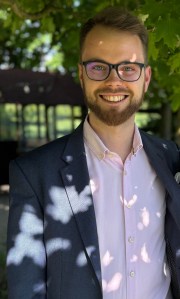
Zhiyuan Wang
Zhiyuan Wang will be pursuing a thesis titled “AI-Enhanced Flow Sensing for Control of Unsteady Flows” and will be supervised by Profs. Andrea Ianiro (UC3M) and Stefano Discetti (UC3M).
Efficient flow sensing and control are crucial for enhancing aerodynamic performance and facilitating the development of high-efficiency, sustainable transportation systems. However, the time-varying and strongly nonlinear characteristics of complex unsteady flows present substantial challenges to achieving these goals. Recent advances in artificial intelligence and neuromorphic computing offer new pathways to address these limitations.
The research will focus on the following key aspects. First, for typical unsteady flows such as dynamic stall and gust encounters, efficient flow dimensionality reduction and feature extraction will be achieved through manifold learning and multimodal learning techniques, aiming to uncover the intrinsic physics and low-dimensional representations of unsteady aerodynamics. Besides, under control actions, investigations of actuation manifolds and multi-actuator coordination control strategies will be conducted. Finally, within an event-driven asynchronous framework, new paradigms for event-based sensors and spiking neural network architectures will be explored, paving the way for practically deployable online flow sensing and control systems.

 PhD in Aerospace Engineering UC3M