We continue our seminars serie, on Friday, March 6th, 13:00 H.
On site: Salón de Grados
For this event in the Aerospace PhD Seminar Series, we will have the pleasure of hosting Dr. Bernd R. Noack, researcher at the College of Mechatronics and Control Engineering, Shenzhen University (Guangdong Province, China). He will be joined by TianXian Zhang and Yang Yang who will provide a brief overview of China’s low-altitude activities and introduce their respective companies and associations.
The event will take place in the Salón de Grados on Friday, March 6th at 13:00 H and it will be streamed online.
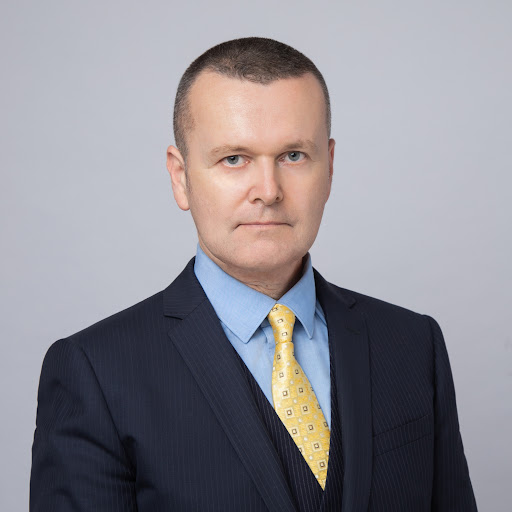
Dr. Bernd R. Noack, Fellow of the American Physical Society, is Distinguished Professor at Shenzhen University and Chief Scientist at the Guangdong Province VTOL Aircraft Manufacturing Innovation Center with secondary affiliations at Harbin Institute of Technology, Shenzhen Technology University, TU Berlin and University Carlos III of Madrid. In Shenzhen, he heads a growing team with five laboratories for the aerodynamics problems of the low-altitude economy. For over three decades, he has worked on engineering turbulence control for transport vehicles in leading European and the US institutions, including the Max-Plank Society, German Aerospace Center (DLR), United Technologies Research Center (UTRC), TU Berlin and the French National Center for Scientific Research (CNRS).
Prof. Noack has written over 350 refereed publications, including 3 patents, 6 books and over 180 journal articles. His work has been awarded with many dozens of national and international awards. For instance, he won China’s first NSFC pilot grant (ICFCRT) in Fluid Mechanics (only 25 awardees per year in all disciplines), became National Talent Professor in China and Fellow of the American Physical Society, got the first senior ANR Chair of Excellence in Fluid Mechanics, and was the only winner of the annual von Mises award 2005. His work includes 34 citation classics and enjoys about 20,000 citations with over 2400 citations per year. Mendeley/Stanford lists him as highly cited scientists among the top 10 aeronautics/aerospace scientists in China. ScholarGPS rates him a top fluid dynamicist in China and top 6 in the world.
“Low-altitude aerodynamics for a future 10 trillion USD market: Optimizing gust-safety and energy efficiency of delivery drones and air taxis”
Abstract:
The rapidly evolving low-altitude economy transforms mankind into an aerial society: Drones and air taxis allow unprecedented transport and mobility overcoming traffic jams in congested metropolises and reaching remote rural destinations. Yet, drones and air taxis are far from aerodynamically optimized. In addition, steady winds and wind gusts challenge the safety of air taxi and delivery drone operation in urban environments. These winds lead to unintended displacements and may result in potential collisions and accidents.
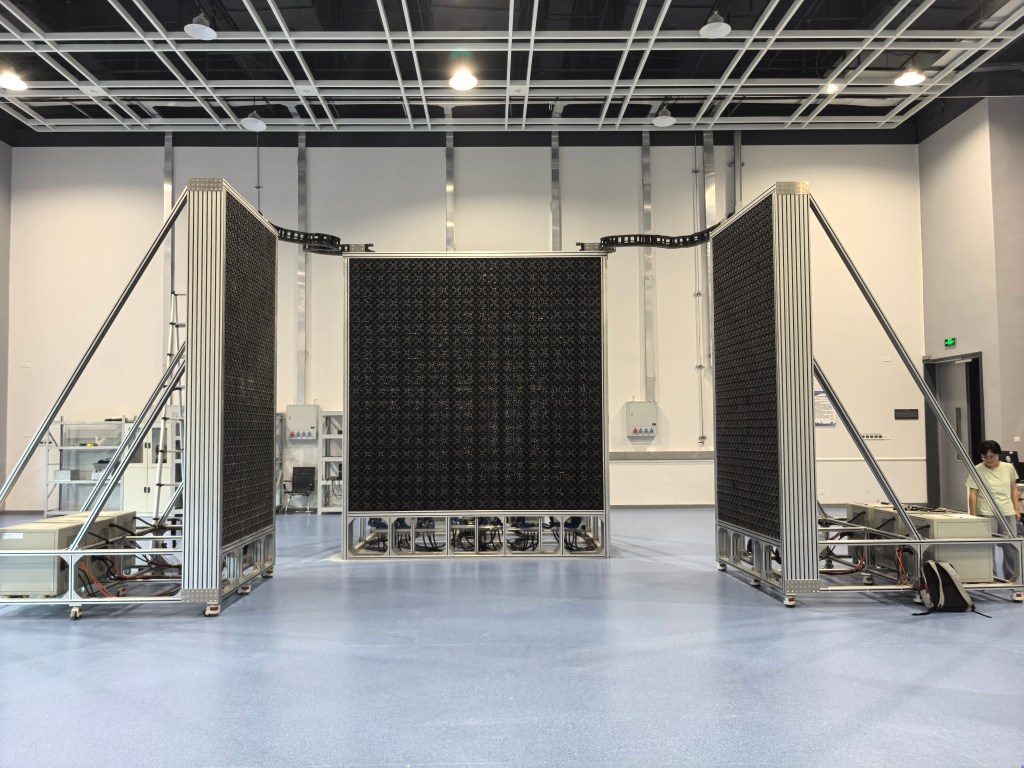
In this talk, we report on aerodynamic technologies and AI addressing these gust safety challenges and improving aerodynamic performance for multicopter drones and air taxis. The gust safety challenge is addressed on several fronts. First, an aerodynamic drone model is developed for low and high-speed operation. This plant serves for the assessment and optimization of cruise performance and flight control under wind gusts. Second, the urban wind conditions are emulated in simulations and experiments with a self-build fan array wind generator (FAWG) with 3200 individually controllable fans (Guinness World Record 2025). Thus, flow prediction methodologies are developed for sparse optimized sensors. Finally, the flight control is optimized for take-off, landing and cruise under gusty wind conditions. The control design employs the aerodynamic model, artificial intelligence based learning and is further improved by estimated flow conditions. Energy efficiency improvement are addressed by rotor shape optimization and smart skin separation control.
The seminar will begin at 13:00 pm and will take place in the Salón de Grados.
No previous registration will be required.
 PhD in Aerospace Engineering UC3M