We continue our seminars serie, on Thursday, April 30th, at 13:00 H.
On site: Salón de Grados
For this event in the Aerospace PhD Seminar Series, we will have the pleasure of hosting Dr. Julien Manin, Principal Research Scientist at Sandia National Laboratories, United Estates of America.
The event will take place in the Salón de Grados on Thursday, April 30th, at 13:00 H and it will be streamed online.
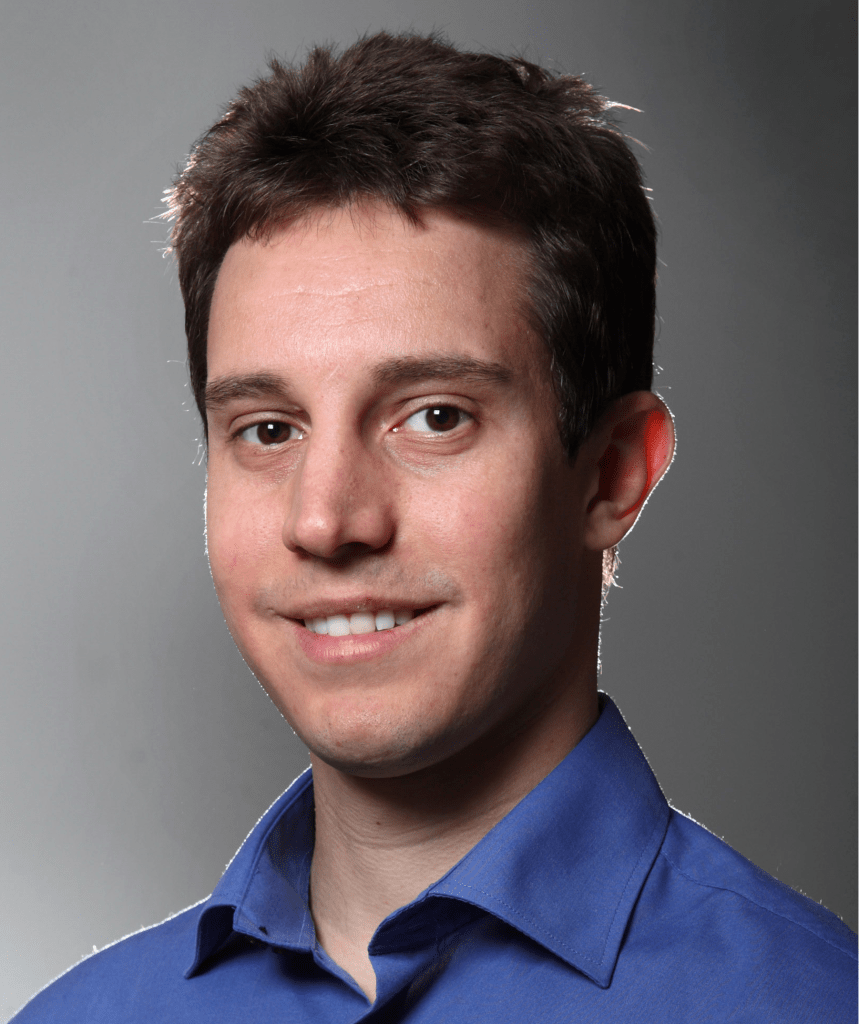
Dr. Julien Manin obtained his M.Sc. degree in Mechanical Engineering and in Automotive and Transportation Systems in France in 2006. He obtained a M.Sc. in Optical Physics in 2009 and completed his Ph.D. in Physics and Mechanical Engineering in 2011 at the Polytechnic university of Valencia, Spain. Dr. Manin has been working at Sandia National Laboratories since 2011, starting as a postdoctoral researcher. He is currently leading the aviation activities at the Combustion Research Facility, Sandia National Laboratories in Livermore, CA. Over the course of his career, he has held various roles in industry and academia, such as advanced diagnostics lead at Artium Technologies, as well as assistant professor positions at the University of Hiroshima, Japan, and at the Polytechnic university of Valencia, Spain. Dr. Manin has gained broad experience in fluid mechanics, thermodynamics, laser and optical diagnostics. He has been involved in many national and international research projects and has published over a hundred research articles in scientific journals or international conferences.
“Recent progress on aviation research at Sandia National Labs”
Abstract:
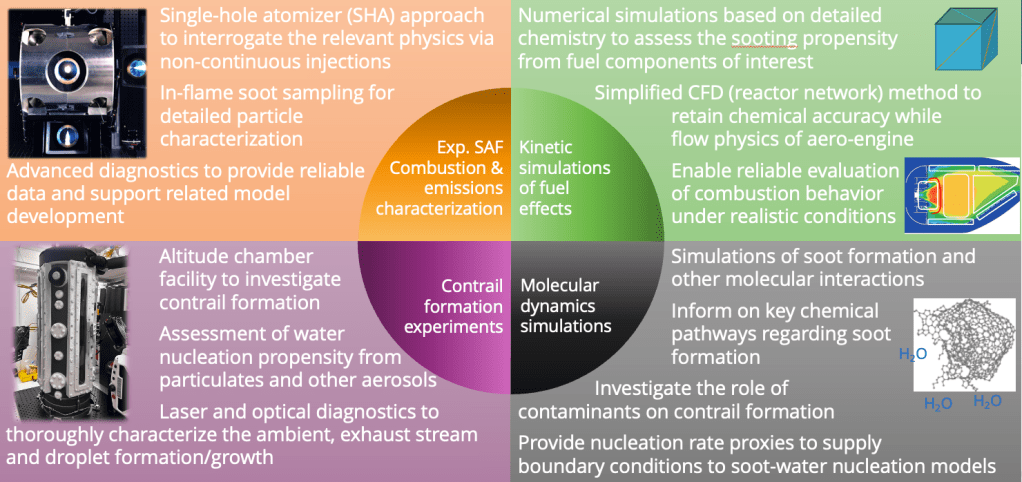
This talk provides an overview of recent progress on the aero-propulsion program at Sandia National Labs. After a brief introduction of Sandia, the Combustion Research Facility and the Applied Combustion department, we will go through the recent and ongoing research projects. Our aviation program is divided into two main parts: Combustion research and contrail formation; both efforts being based on the experimental output of dedicated facilities, aiming at emulating reference systems at relevant conditions. The combustion program focuses on providing fundamental understanding of spray, combustion and emissions (soot formation) at pressures relevant to modern and next generation aero-engines, but also aims at producing data for different fuels, with an emphasis on low fuel volume requirements. The atmospheric nucleation facilities experimentally investigates contrail formation, mostly focusing on the nucleation and initial growth. A common ground for all experimental work is their reliance to non-intrusive diagnostics, applying a large array of optical techniques to study the different processes in detail. The two axes of research are also accompanied by simulation efforts, covering a range of fundamental and applied approaches.
The seminar will begin at 13:00 pm and will take place in the Salon de Grados.
No previous registration will be required.
 PhD in Aerospace Engineering UC3M