We continue our seminars serie, on Thursday, November 5th, 12:30 H.
On site: Salón de Grados (Padre Soler Building)
For this event in the Aerospace PhD Seminar Series, we will have the pleasure of hosting Dr. Francesco Orefice, Assistant Professor in Advanced Aircraft Design at Delft University of Technology (TU Delft).
The event will take place in the Salón de Grados on Thursday, November 5th, at 12:30 H.
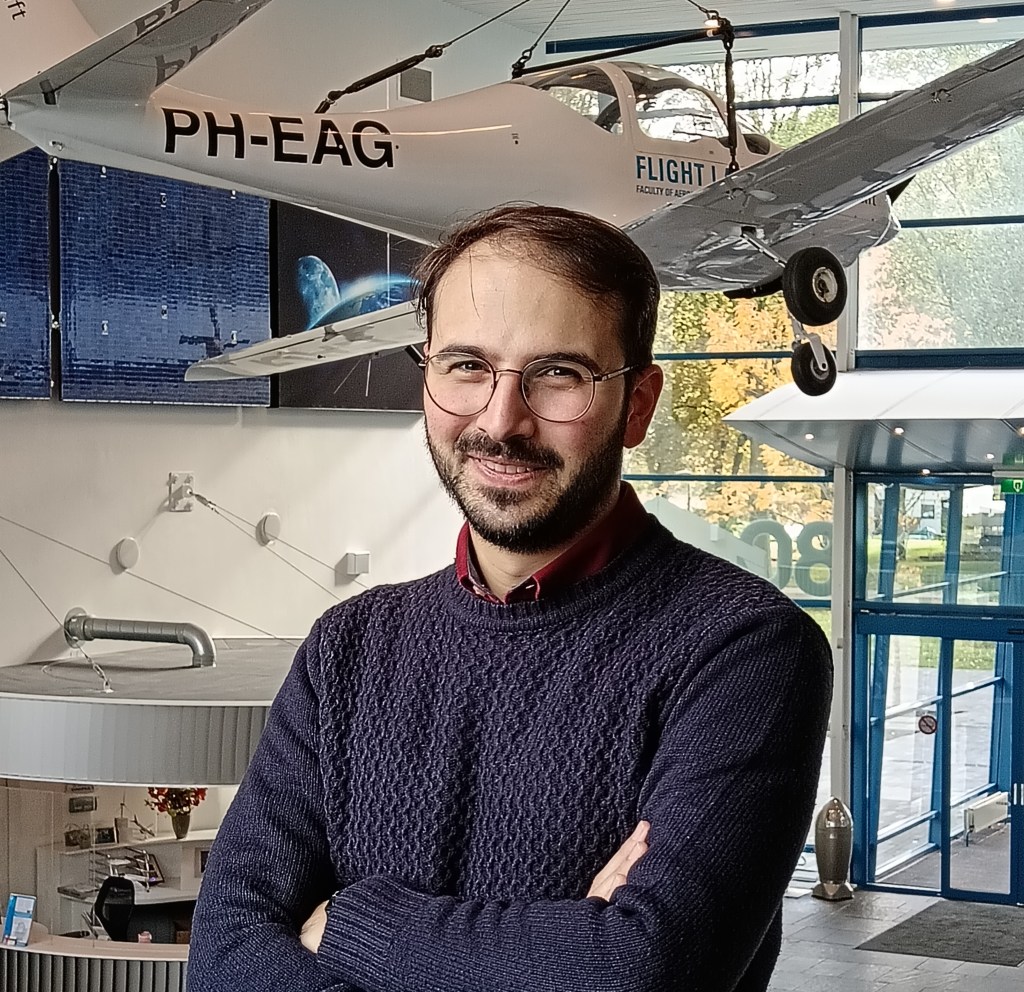
Dr. Francesco Orefice is an Assistant Professor in Advanced Aircraft Design at Delft University of Technology (TU Delft), within the Flight Performance and Propulsion section. His research focuses on sustainable aircraft design and the definition, development, and application of digital assets for the integration of innovative propulsion architectures. Beyond the academic environment, his work on digital aviation includes active involvement in the INCOSE Academic Board and SAE Working Group on Digital Engineering.
“Twinning digitalisation and ecological transition – CRYOSTAR study case”
Abstract:
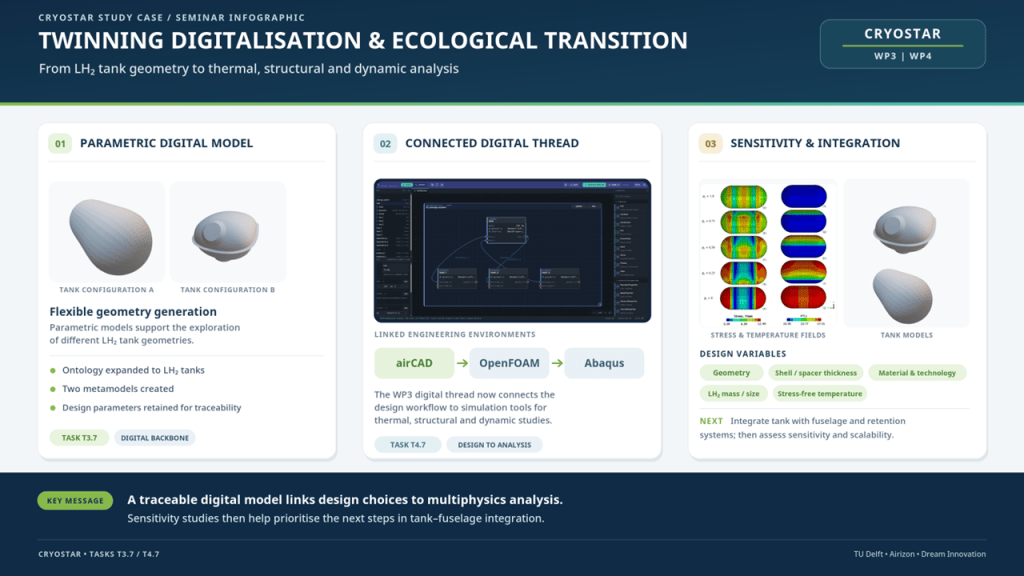
The ecological transition of aviation requires the introduction of disruptive technologies, including liquid hydrogen (LH₂) propulsion systems, while maintaining the high levels of safety and reliability required for aircraft certification. Digitalisation plays a key role in this transition by enabling the integration of multidisciplinary models, experimental data and engineering knowledge throughout the product development lifecycle. This seminar presents the CRYOSTAR project as a case study of the synergy between digitalisation and sustainable aviation. The project investigates the crashworthiness of liquid hydrogen storage systems integrated into aircraft fuselages, addressing the challenges associated with cryogenic conditions, structural deformation, fluid–structure interaction and hydrogen leakage during impact events. A digital-engineering framework combines thermal, structural and crash simulations with experimental testing, linking design assumptions, numerical predictions and physical evidence through a traceable digital thread. Particular attention is given to the role of digital twins and high-fidelity numerical models in understanding complex physical phenomena, supporting experimental validation and reducing uncertainty during technology development. By connecting simulation and testing within a structured verification and validation strategy, CRYOSTAR aims to improve the reliability of engineering predictions and support the definition of a roadmap towards the certification of hydrogen storage technologies for aviation.
The seminar will begin at 12:30 H and will take place in the Salón de Grados.
No previous registration will be required.

