We continue our seminars serie, on Tuesday, May 12th, 13:00 H.
On site: Salón de Grados
For this event in the Aerospace PhD Seminar Series, we had the pleasure of hosting Dr. Marco Civera, Tenure-Track Assistant Professor (RTD-B) at the Department of Structural, Building, and Geotechnical Engineering (DISEG) of Politecnico di Torino, Turin, Italy.
The event took place in the Salón de Grados del Auditorio on Tuesday, May 12th, at 13:00 H and it was streamed online.
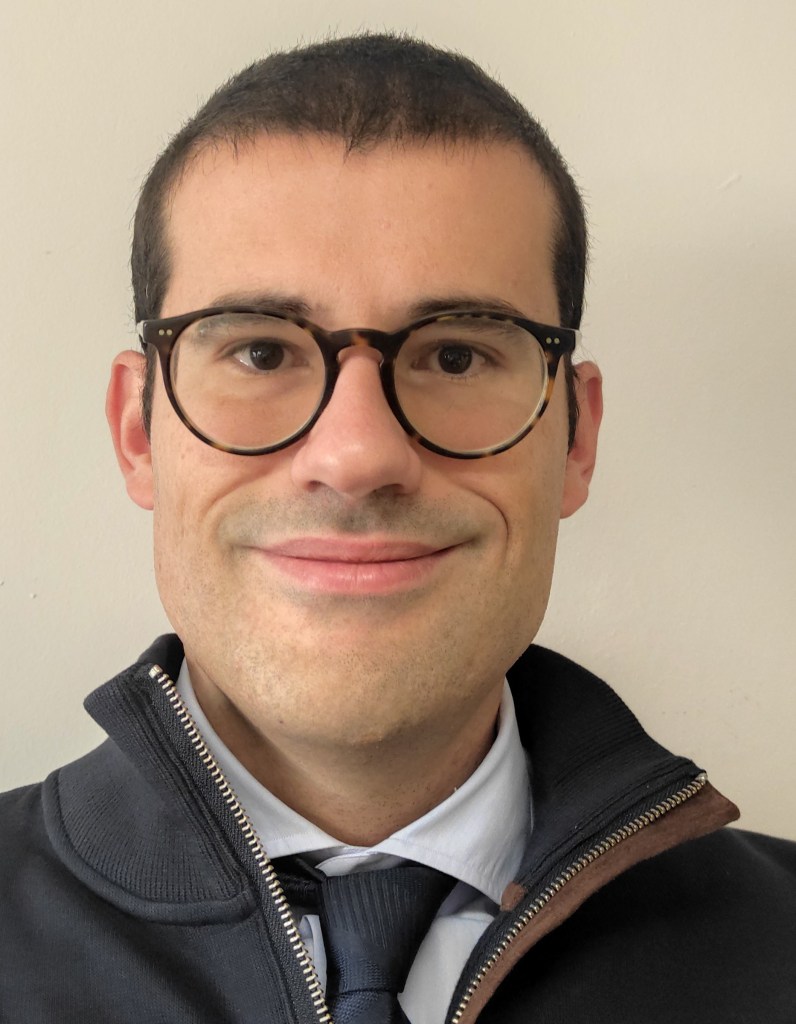
Dr Marco Civera (PhD, Italian CEng, PE) is currently a Tenure-Track Assistant Professor (RTD-B) at the Department of Structural, Building, and Geotechnical Engineering (DISEG) of Politecnico di Torino, Turin, Italy. BSc, MSc in Civil Engineering; PhD in Aerospace Engineering. Studies in Italy (Politecnico di Torino), Switzerland (École Polytechnique Fédérale de Lausanne – EPFL), and the UK (Cranfield University). Chartered Engineer (Italian professional habilitation) since 2018.
His PhD thesis, titled “Vibration-based Assessment of Structural Changes in the Linear and Nonlinear Response of Mechanical Structures for Aerospace Applications” and published in 2021, was developed between Politecnico di Torino (home institution) and Cranfield University (host institution). It focuses on Structural Health Monitoring techniques applicable to Aerospace, Mechanical, or Civil Engineering applications, based on the vibration response of the target system.
Author and co-author of more than 100 Scopus-indexed and peer-reviewed scientific publications, 30 of which as first Author, collectively with more than 1500 citations on Scopus from more than 1100 different documents (h-index = 20). More than 50% of the published articles originate from collaborations with international co-authors; 51% are located in the first quartile (Q1, top 25%) of journals by CiteScore percentile, and 28% belong to the top 10% of most cited documents worldwide. Included in the Stanford University/Elsevier top 2% list of the most cited scientists worldwide since 2024. Ranked in the top 1% of most cited scholars in the speciality of “Structural Health Monitoring” by ScholarGPS® Ranking Analytics since 2025.
At present, teaching in the courses of ‘Dynamic Identification of Structures’ (English, PhD level), ‘Dynamics of Structures’ (EN, MSc), ‘Collasso e monitoraggio delle strutture’ (Collapse and monitoring of structures, IT, MSc), and ‘Structural Mechanics’ (EN, BSc).
“Recent Advances in Vibration-based Identification and Structural Health Monitoring”
Abstract:
Aeronautical and Space Systems heavily rely on Condition and Structural Health Monitoring (SHM) to assess their integrity, operability, and airworthiness. Dynamic (i.e, vibration-based) SHM is the standard tool in this regard. However, some common and legacy System Identification (SI) algorithms show practical limitations and computational inefficiencies due to their underlying assumptions and inner mechanisms.
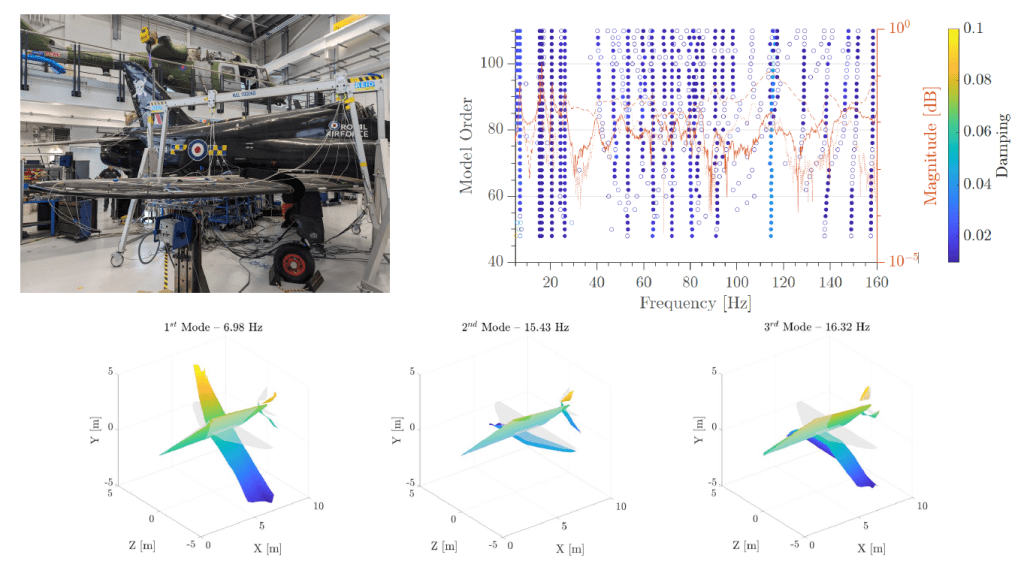
This talk describes recent aerospace and mechanical applications of methodologies derived from circuit SI in electronic engineering. These approaches offer notable advantages in both accuracy and efficiency. Furthermore, their extension from Single-Input Single-Output (SISO) to Single-Input Multi Output (SIMO) and Multi-Input Multi-Output (MIMO) test configurations is discussed. Pioneeringly, output-only variants, intended for ambient-vibration testing (AVT), are also put forward as cost-efficient and practical Operational Modal Analysis (OMA) techniques in Ground Vibration Testing (GVT) without the need for controlled inputs.
Finally, all these SI techniques are applied to and verified for damage detection and assessment in real-life case studies, also including full-scale aircraft and space structures.
The seminar began at 13:00 pm and took place in the Salón de Grados del Auditorio.
No previous registration was required.

