We are pleased to introduce you to our newest additions to the Aerospace Engineering PhD Program for the second semester of this academic year.
Throughout this publication, information is provided on each of the nine new students in the program, along with details about their research topics and supervisors.
Noelia Castrejón Armero
Noelia Castrejón Armero will be pursuing a thesis titled “Development of algorithms for autonomous in-orbit formation flight for small satellites using aerodynamic forces” and will be supervised by Prof. Behrad Vatankhahghadim (UC3M) & Ivan Castro (INTA).
The main objective of this thesis is to develop and implement algorithms for autonomous formation flight in future INTA missions (ANSER-AT and Q-ANSER), utilising the aerodynamic forces of lift and drag in low Earth orbit. This is particularly interesting for groups of small platforms, as they can carry out formation flight control in different orbital configurations without consuming energy and without the need for a propulsion system. These future missions aim to fulfil Earth observation objectives: ANSER-AT (scheduled for launch in 2027) is a mission dedicated to studying the chemical composition of the Earth’s atmosphere, and Q-ANSER (currently in the pre-design phase) will focus on quantum key distribution, with the key feature that the satellites will have the capability to perform manoeuvres autonomously in orbit.
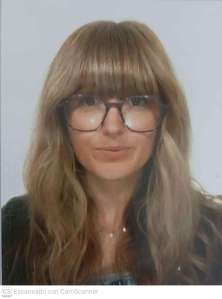
Susanne Dold
Susanne Dold will be pursuing a thesis titled “FE-Based Sizing Methodology Development for Structural Optimisation of Manufacturable and Certifiable Non-Conventional Lightweight Composite Structures” and will be supervised by Prof. Andrea Cini (UC3M).
This thesis will develop a novel sizing procedure for optimizing lightweight composites. Moving beyond “black metal” methods, it exploits unbalanced, non-symmetric laminates for aeroelastic tailoring. Integrating manufacturing and damage tolerance constraints directly into the loop yields a robust FE framework for minimum-weight, certifiable airframes.

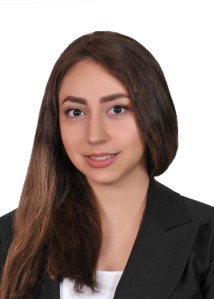
Mahsa Fatehi
Mahsa Fatehi will be pursuing a thesis titled “GPU accelerated Hybrid Discontinuous Galerkin Framework: Development, Validation and Application” and will be supervised by Profs. Ceren Gürkan (UC3M) & Ignacio Andreu Angulo (UC3M).
This thesis focuses on developing an in-house GPU-accelerated Hybridizable Discontinuous Galerkin (HDG) solver for fluid dynamics applications, with a focus on the simulation of complex flow phenomena around vertical-axis wind turbines (VAWTs). While the solver is intended as a general purpose framework for a wide range of fluid dynamics problems, its capabilities will be demonstrated through realistic wind turbine aerodynamics simulations to support aerodynamic design optimization.
Manuel Ferrazzani
Manuel Ferrazzani will be pursuing a thesis titled “A theoretical and numerical analysis of the plasma response in a 10-kW class applied-field magnetoplasmadynamic thruster” and will be supervised by Prof. Eduardo Ahedo (UC3M).
At power levels below few hundreds of kWs, the plasma-induced magnetic field of a classical magnetoplasmadynamic thruster (MPDT) is negligible. An external magnetic field is imposed, leading to the applied-field magnetoplasmadynamic thruster (AF-MPDT). This concept is rather different from the MPDT and the resulting device configuration is closer to the Hall effect thruster (HET) one, and presents also the same plasma acceleration stage, based on a magnetic nozzle (MN) as an electrodeless plasma thruster (EPT). This Thesis pursues to assess the AF-MPDT in that low power range and to stress out the possible similarities with HETs and EPTs.
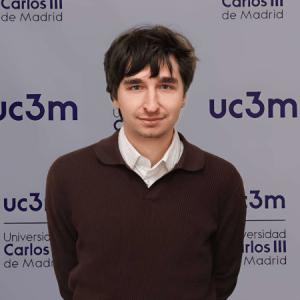
César A. García Núñez del Arco
César A. García Núñez del Arco will be pursuing a thesis titled “Novel multilayer structures for ballistic protection of military rotary-wing aircraft against small-caliber projectiles” and will be supervised by Prof. Federico Martín de la Escalera (UC3M) & Leopoldo Santos Santos (ESPOL).
Military helicopters operating in hostile zones face multiple threats. Due to limited armor protection and the difficulty of threat detection, attacks from concealed positions represent a critical risk factor. In this context, advanced lightweight multilayer composites structures can enhance airframe protection against impacts from small-caliber projectiles.

Andrés Infante Adrián
Andrés Infante Adrián will be pursuing a thesis titled “Real-time optimal initialization and maintenance of spacecraft formation flying” and will be supervised by Profs. Behrad Vatankhahghadim (UC3M) & Kun Wang (UC3M).
Real-time optimal guidance for spacecraft formation flying, enabling fast initialization and autonomous maintenance through onboard optimization and control strategies for precise, fuel efficient multi-spacecraft operations.
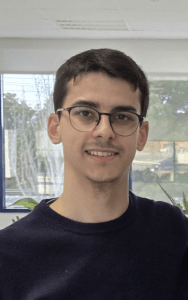
Saumya Ranjan
Saumya Ranjan will be pursuing a thesis titled “Numerical modeling and analysis of air-breathing electric propulsion thrusters for LEO drag compensation” and will be supervised by Profs. Jiewei Zhu Zhu (UC3M) & Ahilan Appar (UC3M).
Very Low Earth Orbit enables high-resolution Earth observation, low-latency communications, and emerging in-orbit services, but persistent atmospheric drag severely limits mission lifetime. Atmosphere-breathing electric propulsion offers a disruptive solution by collecting residual atmospheric species and using them directly as propellant, eliminating onboard propellant storage. However, current ABEP prototypes exhibit low efficiency, and existing modeling approaches treat the intake and plasma thruster separately, relying on simplified gas surface interaction models and incomplete air plasma chemistry.
This PhD thesis aims to develop a self-consistent, two-way coupled numerical framework that integrates intake flow and plasma discharge within a unified simulation tool. The in-house hybrid code HYPHEN will be extended to incorporate atomic-based, material-dependent gas/plasma surface interaction models and an expanded multispecies air chemistry including heavy-species reactions and multiply charged ions. The upgraded tool will quantify intake mass flow under realistic orbital conditions, analyze discharge physics for representative Hall and RF ion thrusters, and determine optimal operating regimes for VLEO drag compensation.
The expected outcomes include the first comprehensive intake–thruster coupled characterization of ABEP systems, identification of dominant efficiency and loss mechanisms, and the delivery of an advanced simulation platform to support future prototype design. This research will strengthen UC3M’s leadership in electric propulsion and contribute to the technological maturation of sustainable VLEO missions.
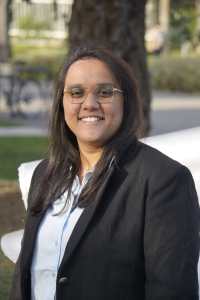
Brian Sebastiani
Brian Sebastiani will be pursuing a thesis titled “Sparse sensing of controlled turbulent jets: optimal placement and event-based strategies” and will be supervised by Prof. Andrea Ianiro (UC3M).
Turbulent jets are ubiquitous in aerospace and industrial applications, from aircraft propulsion to noise generation and energy systems. Understanding and controlling their complex dynamics demands measurement and sensing strategies that can capture the essential flow physics in real time while remaining tractable in terms of data volume and computational cost. This thesis aims to develop an event-based framework for sensing and estimating the flow field of turbulent jets, including jets subjected to active flow control. The experimental campaign will combine Particle Image Velocimetry (PIV) for high-fidelity flow characterization with microphone arrays deployed around the jet for acoustic sensing. Active control will be applied using loudspeakers or pulsed-jet actuators, since a central goal of the thesis is to reconstruct low-order representations of the flow field not only in natural conditions but also under the effect of actuation — a prerequisite for any practical closed-loop control system. Building on event-based signal processing paradigms and spiking neural networks, the work will investigate how an array of pressure sensors can be used to reconstruct a simplified, low-order representation of the turbulent flow field, mirroring the way biological systems, such as insects, sense and react to their aerodynamic environment with only a handful of event-driven receptors. The proposed framework pursues sparsity along two complementary dimensions: sparsity in space, through optimal sensor placement strategies that minimize the number and optimize the arrangement of sensors required to achieve a target estimation accuracy; and sparsity in time, through event-based processing that triggers acquisition and inference only when dynamically relevant changes are detected. The research is framed within the ERC Consolidator Grant project SPANDRELS (SParse AND paRsimonious Event-based fLow Sensing) and will be carried out in the Department of Aerospace Engineering at Universidad Carlos III de Madrid (UC3M).
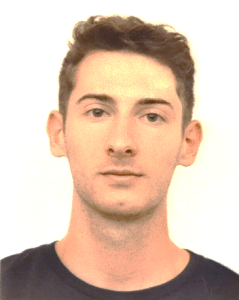
Najib Valeyev
Najib Valeyev will be pursuing a thesis titled “Calibration of Long-Term Contrail Evolution Using Multi-Sensor Observations” and will be supervised by Prof. Manuel Soler Arnedo (UC3M).
Aerospace Engineering PhD with diverse experience in aircraft design, maintenance, and system troubleshooting. Well-versed in interpreting OEM documentation and regulations alongside a strong command of CAD, CFD, and diagnostic tools. Recognized for delivering innovative solutions, rapid prototyping, and effective team leadership that drives operational efficiency and safety.
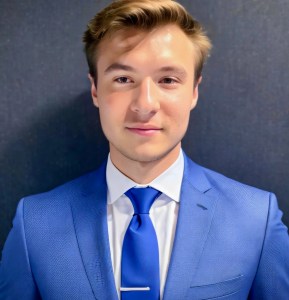
 PhD in Aerospace Engineering UC3M